Bet on the Controller: Why Asian Esports Wagering Is About to Blow Up Your Sportsbook
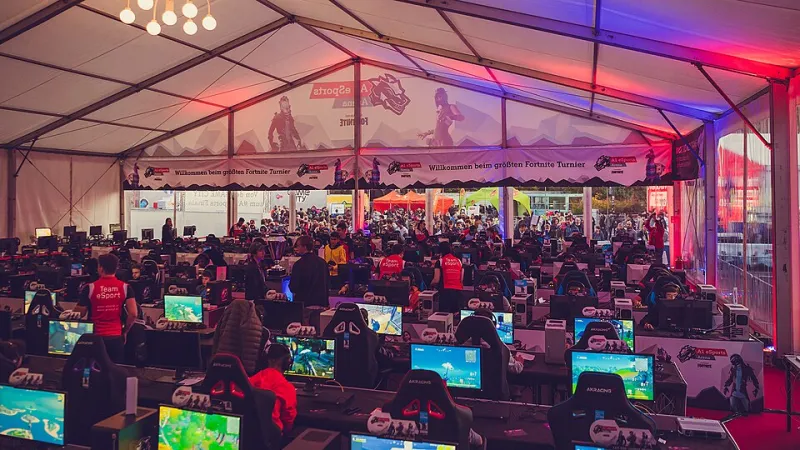
Photo: Haselman, CC BY-SA 4.0, via Wikimedia Commons
Let's be honest — most American sports bettors still treat esports wagering like a novelty. Something for teenagers. A side menu item you scroll past on your way to the NFL odds. That attitude is becoming expensive, because while US bettors have been sleeping on this sector, Asian markets have spent the better part of a decade building the most sophisticated esports betting infrastructure on the planet.
Now that infrastructure is pointing west, and the opportunity window for early-mover American bettors is wide open.
The Scale of What's Already Happening in Asia
To understand why this matters, you need to appreciate the sheer scale of competitive gaming in markets like South Korea, China, the Philippines, and Southeast Asia broadly. This isn't a subculture. In South Korea, professional League of Legends players are national celebrities. Major tournaments in China fill 80,000-seat stadiums. In the Philippines, Mobile Legends: Bang Bang has a following that rivals basketball — the country's most beloved traditional sport.
The betting markets that have grown around these games reflect that cultural weight. Asian esports wagering platforms offer live in-match betting, prop markets on individual player performance, tournament futures, and map-by-map spread betting with the kind of granularity that NFL bettors would recognize from their own market. This isn't primitive stuff. It's a mature, highly liquid betting ecosystem that processes enormous volume on a daily basis.
And American sportsbooks, for the most part, are still offering you a moneyline on who wins the tournament. That's the gap we're talking about.
The Titles Driving the Most Betting Action
Not all esports are created equal from a betting perspective. Here's a quick breakdown of the titles generating the most wagering activity in Asian markets — and why each one presents interesting angles for US bettors.
League of Legends (LoL) remains the dominant force in Korean and Chinese esports betting. The game's structure — five players per side, 30-to-45-minute matches, distinct phases of play — creates natural betting checkpoints. Live wagering on objective control (first tower, first dragon) has become a sophisticated market in its own right, and understanding team compositions gives sharp bettors a real edge over closing lines.
Dota 2 commands a particularly devoted betting community, partly because its prize pools (The International has distributed over $40 million in a single year) attract serious bookmaker attention. The game is notoriously complex, which creates inefficiencies in betting markets that knowledgeable players can exploit. Asian betting platforms have historically offered deeper Dota 2 markets than their Western counterparts.
Mobile Legends: Bang Bang (MLBB) is the wildcard that most American bettors have never heard of but probably should know. It's the dominant mobile esport across Southeast Asia, with a professional league structure that runs year-round. Because it's less familiar to Western oddsmakers, the lines can be softer — a classic opportunity for bettors who do their homework.
Valorant is the bridge title. It has a strong Asian competitive scene but also genuine traction in North America, which means the talent and the storylines are more accessible to US audiences. It's arguably the best entry point for American bettors who want to develop esports handicapping skills before diving into less familiar territory.
What Asian Platforms Do Differently
Here's where the competitive gap between Asian-focused platforms and mainstream American sportsbooks becomes really apparent. Asian esports betting platforms don't treat competitive gaming as an afterthought — they build their entire product architecture around it.
What does that look like in practice? Faster live odds updates that keep pace with the speed of play. More granular prop markets — not just match winner, but kill totals, round handicaps, time-of-first-kill. Dedicated esports customer service staff who actually understand what they're taking bets on. And critically, better odds in many cases, because the competition for esports bettors in Asian markets is fierce enough to compress the vig.
American sportsbooks have been slow to match this because their legacy infrastructure was built for football, basketball, and baseball. Bolting esports onto that framework produces a product that works but doesn't excel. For US bettors who are serious about this market, seeking out platforms with genuine Asian esports expertise isn't just a preference — it's a strategic advantage.
How to Actually Handicap Esports
Okay, so you're convinced this is worth your time. Where do you start?
The learning curve is real but manageable, and the good news is that the analytical skills you've already built as a sports bettor transfer more than you'd expect.
Team form and roster stability matter enormously. Esports rosters change frequently — players are bought, sold, and loaned between organizations constantly. A team with a new player in a critical role is a very different bet than the same team a month earlier. Tracking roster moves is the esports equivalent of tracking injury reports, and most casual bettors don't bother.
Patch cycles are your friend. Most competitive esports titles update their game balance regularly, buffing some characters or strategies and nerfing others. Teams that adapt quickly to patch changes tend to outperform teams that don't, and this effect is most pronounced in the weeks immediately following a major update. Following patch notes is genuinely useful handicapping research.
Head-to-head records in specific formats matter more than overall win rate. In Dota 2 and LoL especially, some teams have stylistic advantages over specific opponents that show up reliably in their historical matchups. This kind of matchup-specific analysis is underutilized in esports betting markets, which creates value for bettors willing to dig into it.
Why US Sportsbooks Are Scrambling Right Now
The major American operators aren't oblivious to what's happening. DraftKings, FanDuel, and BetMGM have all expanded their esports offerings meaningfully over the past two years, and the pace of expansion is accelerating. They're responding to user demand, yes, but they're also responding to competitive pressure from platforms with deeper Asian market roots that are now targeting US customers directly.
This competitive dynamic is good for bettors. When multiple books are fighting for your esports action, odds improve, markets deepen, and promotions get more generous. The bettors who position themselves in this market now — before it fully matures in the US — are the ones who'll benefit most from that competition.
The Asian esports betting machine has had a decade-long head start. But the race to bring it to American audiences is officially on, and your sportsbook is about to look a lot different because of it. The only question is whether you're ahead of that curve or catching up to it.