Old Games, New Chains: How Asian Blockchain Gaming Is About to Rewire What Americans Play for Money
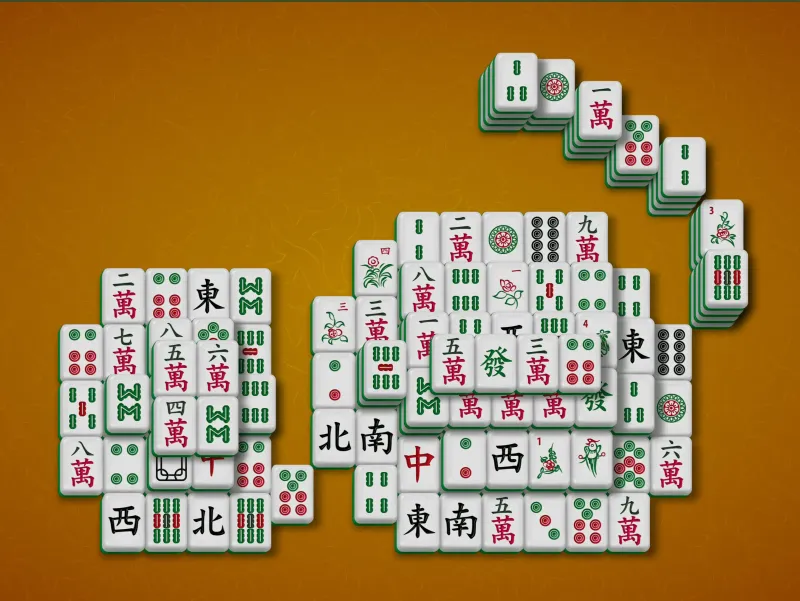
Photo: mahjong tiles cryptocurrency blockchain digital gaming technology, via themahjong.com
Somewhere between a DeFi whitepaper and a centuries-old tile game, a genuinely weird and compelling thing is happening in the gaming industry. Asian tech startups are rebuilding traditional games — Mahjong, Pai Gow, Dou Dizhu — on blockchain infrastructure, wrapping them in crypto reward systems, and quietly rolling them out to Western audiences who've never touched a Mahjong tile in their lives.
And it's working.
Not at massive scale yet. But the engagement numbers coming out of early Western beta tests for several of these platforms are hard to ignore, and the companies building them are well-funded, technically serious, and strategically patient in a way that most US-based gaming startups simply aren't.
The Games at the Center of It All
To understand why this matters, it helps to appreciate what these games actually are — because most American players only have a vague idea.
Mahjong, in its various regional forms, is one of the most strategically complex tile games ever invented. The Chinese version alone has dozens of regional variants with meaningfully different rules. It's not the simplified solitaire version you've probably seen on your phone. Competitive Mahjong involves deep probability calculation, opponent modeling, and risk management that poker players would recognize immediately. The game has hundreds of millions of active players across Asia and a dedicated competitive scene that's been running for generations.
Dou Dizhu — which roughly translates to "Fight the Landlord" — is a three-player card game that became one of the most popular games in China in the early 2000s. It's fast, strategic, and deeply social. Think of it as somewhere between Spades and a stripped-down poker variant with its own distinct combinatorial logic.
Pai Gow, which American casino players might recognize in its poker variant form, originates from a Chinese domino game that's been played for over a thousand years. The blockchain versions being developed aren't just digital recreations — they're reimaginings with tokenized reward structures, verifiable fairness through smart contracts, and competitive ladders that feed into real economic value.
The Companies Building This Space
A few names are worth watching closely if you want to understand where this is heading.
Mahjong Meta, a Singapore-based startup, has been building a competitive Mahjong platform with NFT-based tile sets and a play-to-earn model that's gained traction in Southeast Asia and is currently expanding its English-language interface. The platform uses smart contracts to verify game outcomes, which addresses one of the core trust issues that has historically kept Western players away from Asia-based gaming platforms.
Decentral Games, while technically founded in the US, has deep ties to Asian gaming culture and has integrated Pai Gow variants into its blockchain casino ecosystem. It operates on the Polygon network and has been one of the more successful examples of bridging Eastern game design with Western crypto audiences.
Then there are the bigger players. Animoca Brands, the Hong Kong-based gaming and venture capital firm, has invested in or incubated dozens of blockchain gaming projects, several of which incorporate traditional Asian game mechanics. Their portfolio reach into the US market has grown substantially, and they're increasingly seen as the connective tissue between Asian gaming IP and Western blockchain infrastructure.
Why American Casual Gamers Are Actually Interested
This is the part that surprises people. The assumption has always been that American players wouldn't engage deeply with games that carry so much cultural context from a different tradition. That assumption is looking increasingly outdated.
A few things are driving the shift. First, the play-to-earn model removes a huge barrier. When there's a genuine financial incentive attached to learning a new game, players are willing to invest time in the learning curve. The crypto reward structure essentially subsidizes the education process.
Second, there's a broader cultural moment happening. K-dramas, anime, Asian cuisine, and Asian-influenced aesthetics have achieved genuine mainstream penetration in American pop culture over the last decade. The audience for Asian cultural content in the US is larger, younger, and more engaged than it's ever been. Games that carry that aesthetic and cultural DNA are arriving into a much more receptive environment than they would have found ten years ago.
Third — and this is underrated — the games are actually good. Dou Dizhu in particular has a learning curve that's gentle enough for casual players but a strategic ceiling high enough to keep competitive players engaged for years. When American players discover it through a well-designed blockchain platform with good English-language UX, the reaction is often genuine enthusiasm rather than confusion.
The Regulatory Wall and How Startups Are Navigating It
None of this is without friction. The regulatory environment for blockchain gaming in the United States is, to put it diplomatically, a work in progress. The distinction between a play-to-earn game and an illegal gambling product is genuinely blurry in many states, and several Asian startups have had to restructure their US-facing products to avoid triggering state gambling regulations.
The most common approach is the skill-game carve-out. Games like Mahjong and Dou Dizhu have legitimate claims to being skill-based, which gives legal teams something to work with. Several platforms are also building two-track systems — a crypto-enabled version for jurisdictions where it's clearly legal, and a points-based version for markets where the regulatory picture is murkier.
The SEC's ongoing scrutiny of tokenized gaming assets adds another layer of complexity. Some of the NFT-based reward systems that work smoothly in Singapore or Hong Kong run into securities questions when offered to US residents. The companies navigating this successfully tend to be the ones that hired US regulatory counsel early rather than treating compliance as an afterthought.
The Bigger Picture
What's actually happening here is a convergence of several trends that were always going to intersect eventually. Asian gaming culture has centuries of depth and hundreds of millions of active participants. Blockchain technology offers a trust and incentive layer that makes cross-border digital gaming economically viable. And the American market — the largest and most valuable gaming market in the world — is more culturally open to Asian game design than it's ever been.
The startups that figure out how to package that convergence correctly — with good UX, solid regulatory strategy, and genuine respect for the source material — are going to find an audience that's ready and waiting.
Mahjong might be ancient. But the version coming to your phone next year is going to feel like the future.