What Ancient Asian Card Games Know About Betting That Vegas Never Taught You
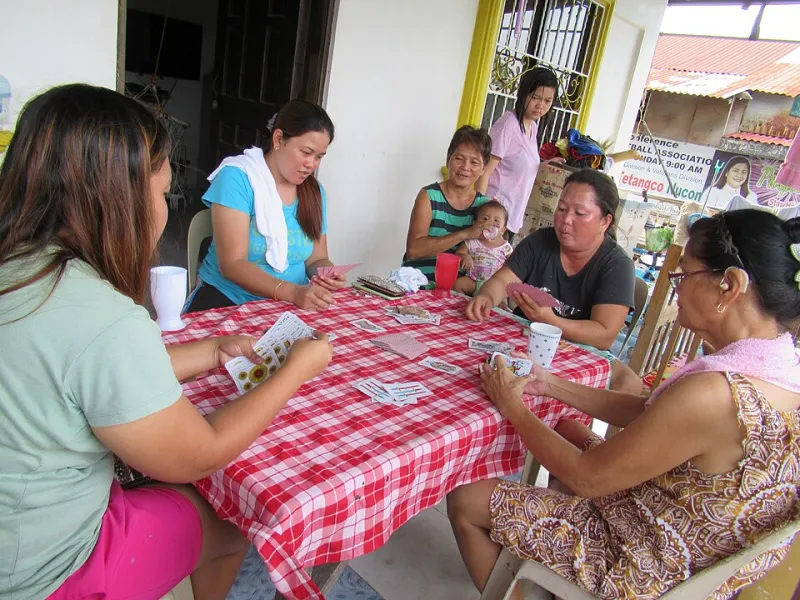
Photo: RamaGaspar, CC BY-SA 4.0, via Wikimedia Commons
American bettors are pretty good at learning the rules. They study pot odds, memorize basic blackjack strategy charts, and maybe even dabble in card counting YouTube tutorials. But there's a whole category of strategic thinking that never makes it into those crash courses — and it's been sitting in plain sight inside Asian card game traditions for hundreds of years.
Games like Tichu (a team-based climbing card game with roots in China) and Dou Dizhu (the wildly popular "Fight the Landlord" game played by hundreds of millions across East Asia) aren't just fun ways to pass time. They're strategic laboratories. The frameworks baked into these games expose some pretty significant blind spots in how the average American approaches poker, blackjack, and sports wagering.
Let's get into it.
Hand Evaluation Isn't Just About What You Hold
In American poker culture, hand strength is treated almost like a fixed value. You've got pocket aces — that's strong. You've got seven-two offsuit — that's weak. Simple enough, right?
Dou Dizhu blows that logic up immediately.
In Dou Dizhu, a hand's value is almost entirely contextual. A pair of threes might be worthless in isolation, but when you understand the flow of the game — what cards have been played, what your opponents are likely holding, what combinations are still possible — those same threes can become the key to controlling the entire round. Players are constantly recalculating hand value based on positional advantage and remaining deck composition, not just the raw strength of their cards.
American bettors tend to anchor too hard on initial hand assessments. Poker players call it "falling in love with your hand." The Dou Dizhu mindset forces you to keep asking: Is this still good right now, given everything I know? That kind of dynamic re-evaluation is genuinely underused at American poker tables, especially in multi-street situations where the board completely changes the relative strength of your holding.
Silent Communication and What It Costs You When You Ignore It
Tichu is a partnership game. You and a teammate are working together to shed cards before the opposing pair does, but here's the catch — you can't openly discuss your hands. Instead, players have developed a nuanced system of signals, legal in-game calls, and timing cues that communicate information across the table without tipping off opponents.
This might sound irrelevant to solo casino games, but stick with us.
The underlying skill being trained here is information processing under constraint. Tichu players become extraordinarily sensitive to what actions mean beyond their face value. A particular call made early in the round signals confidence. Hesitation before a play suggests uncertainty. The timing and sequencing of moves carries as much information as the moves themselves.
Now think about a poker table. How often do American players actually pay attention to how opponents bet, not just how much? Bet sizing tells, timing patterns, the physical or digital hesitation before action — these are the Tichu player's native language. Most casual American bettors are functionally illiterate in it. They're so focused on their own cards that the constant information stream coming from opponents just washes over them.
That's leaving money on the table. Literally.
Psychological Misdirection as a First-Class Strategy
Here's where things get really interesting. Both Tichu and Dou Dizhu treat psychological misdirection not as a bonus tactic but as a core strategic pillar. In Dou Dizhu especially, skilled players will deliberately play suboptimally in the short term to plant false impressions about their hand structure. They'll sacrifice a small edge now to manufacture a much larger one later.
In American betting culture, deception tends to be pretty binary. You're either bluffing or you're not. The concept of multi-layered strategic deception — where your actions across several decisions are building a false narrative that only pays off rounds later — is something most players never develop.
Think about what this looks like in blackjack. Obviously you're playing against the house, so pure deception doesn't apply. But the principle of sequenced decision-making — where each choice is partly about the current hand and partly about setting up future positions — absolutely does. Advanced blackjack players who manage their betting patterns strategically over time, rather than treating each hand as isolated, are essentially running the Dou Dizhu playbook.
In sports betting, this translates to narrative management. Sharp bettors don't just evaluate each game independently. They're tracking line movement, public betting percentages, and their own wagering history to understand when the market has been misdirected — and how to exploit that.
Bankroll Thinking: The Landlord Lesson
Dou Dizhu has a fascinating economic structure. One player takes the role of the "Landlord" and plays against two partners. The Landlord wins more if they succeed but loses more if they fail. The game essentially forces players to constantly evaluate risk-adjusted returns — not just "can I win?" but "is winning here worth what I'm putting on the line?"
This is bankroll management philosophy in game form. American players, particularly recreational ones, tend to think about bankroll in terms of session limits: "I'll stop when I lose $200." That's a loss-mitigation framework, not a strategic one.
The Landlord mindset asks a different question: Given my current position, what's the expected value of taking on this level of risk? It builds intuition for asymmetric risk — situations where the potential upside doesn't justify the downside exposure, even when winning feels likely.
For sports bettors managing a real bankroll across a season, this is the difference between grinding profitable results and going bust on a hot streak that turned cold.
Bringing It to Your Game
None of this requires you to become an expert Tichu player (though honestly, it's a great game — look it up). The point is that these traditions encode strategic wisdom that Western gaming culture hasn't fully absorbed yet.
A few practical takeaways:
- Reassess hand strength dynamically, not just at the start of a hand. What's strong preflop can be a liability by the river.
- Read the meta-information in how opponents act, not just what they do. Timing and sequencing matter.
- Think in sequences, not isolated decisions. Your actions now are setting up future situations.
- Evaluate risk asymmetrically. Not every winnable situation is worth entering.
Asia's card game traditions have been quietly running a masterclass in strategic thinking for centuries. American bettors who tap into that are picking up an edge that most of their competition doesn't even know exists.
At Fun88 Asia, that's kind of the whole point.